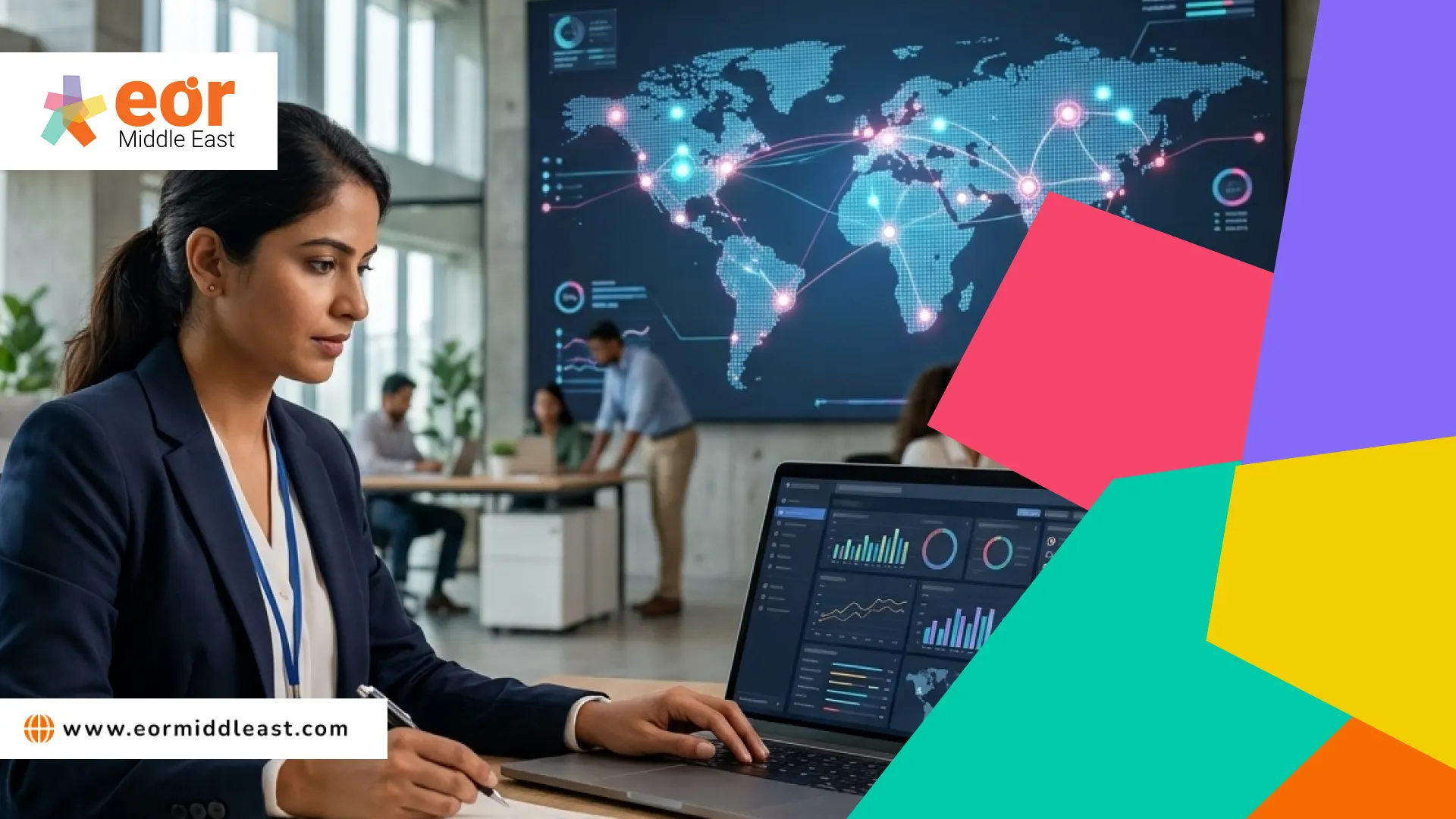

Remote working has become perhaps one of the greatest modern opportunities to improve a company’s happiness, economics, productivity, diversity, agility, talent pool, and environmental impact. In addition, a contract-staffing agency is an ideal choice if a company is looking for temporary remote workers to do specific tasks.
In this article, you will learn everything you need to know about the benefits of remote and contract work for companies. Many companies are embracing remote work and becoming an existential threat to companies that do not.
1. What does remote working entail?
Firstly, it is crucial to fully understand the concept of remote employment. In this way, we can a have clear vision of this matter and why it has become something very common this past few years among companies around the globe.
This practice consists of working from a location other than a central office operated by an employer. Indeed, these locations could include an employee’s home, a co-working or other shared space. For instance, private offices or any other place outside of the traditional corporate office building or campus.

It is the work done at a distance using ICTs to produce goods and services on their own or for others and to sell products and services to the world. The ICTs necessary for these tasks are mostly, Internet, PC, cell phone, telephone, and digital cameras, among others.
Therefore, it mainly includes activities such as web browsing and emailing. In conclusion, it separates workers from personal contact with work colleagues who are in that office. The new technology makes this separation possible by facilitating communication.
2. Why has remote working become so important for companies?
Many of the tasks that employees carry out in an office do not require the presence of the worker at his post. Hence, they can perform them remotely using information and communication technologies (better known as ICTs).
In this manner, commute times and downtime reduce without tasks to perform. It also proposes a re-planning of work; from hours in the office to hours spent at work. ICTs allow to process information for work purposes. These can include the computer, the fax, mobile phones, the internet itself (email, chat, calls over IP and videoconference), etc.
They can do the job in the comfort of their home, in a coworking center, in a hotel, in a restaurant, in a bus, in a car, in an internet café, or any other place. It is common for remote workers to adopt the freelance work modality, where through different platforms where they find remote clients who are looking for their services.
3. What are the remote work modalities?
Regarding remote employment, there are different modalities, which are given by various conditions. The most recurrent classification is based on the workplace: at home, it is the most common situation and with the greatest growth, it usually presents itself as flexibility of the working day. The second option is to rent a position in a telecentre, which has all the necessary services.
On the other hand, there is a second classification based on the connection established between the company and the worker during the working day. Thus, in this case, the following types are:
- Interactive teleworking, also called online or in real-time, where there is a direct connection between the worker’s terminal and the company, which can control the activity carried out.
- One way, in which the connection is unidirectional, therefore the data reaches the company but direct control over the teleworker is not possible.
- The disconnected one, in which there is no direct connection, the employee receives prior instructions, with which he will carry out the assigned tasks, to finally send the data to the employer.
4. Remote working during the COVID-19 pandemic
Following the COVID-19 pandemic, society underwent profound transformations, and the labor market was no exception. What initially emerged as an emergency response to confinement and physical-distancing measures evolved into a structural change in how work is organized. Remote work, once a temporary solution, has become an established and strategic component of modern employment models.

In the years that followed the pandemic, organizations consolidated the digital changes they had rapidly implemented. Companies redefined processes, leadership styles, and performance metrics while investing heavily in digital infrastructure and collaboration technologies. As a result, remote and hybrid work models became normalized across many industries, enhancing operational resilience, expanding access to global talent, and improving work–life balance for employees.
By the mid-2020s, professionals had fully developed the skills required to work effectively in distributed environments. Rather than simply replicating office routines online, organizations embraced outcome-based management, asynchronous communication, and flexible schedules. By 2026, remote work is no longer viewed as an exception, but as a mature and sustainable work arrangement that continues to shape workforce expectations and corporate culture.
4.1 What is next then?
Looking ahead, the evolution of telework continues to redefine the companies of the future. Hybrid models—combining remote and on-site work—have become the dominant approach, allowing organizations to balance flexibility, collaboration, and productivity. Studies conducted in recent years indicate that a large majority of knowledge workers engage in remote work at least several days per month, with many roles being fully location-independent.
In 2026, remote work is widely recognized as a key driver of employee satisfaction, organizational agility, and long-term competitiveness. As companies refine their strategies, the focus has shifted toward sustaining engagement, strengthening digital leadership, and ensuring equitable opportunities regardless of physical location. Ultimately, remote work is no longer about crisis management, but about designing smarter, more human-centered ways of working.
4.2 Future of remote working
Regarding the future of teleworking, the labor market will begin to adapt to more flexible working hours. This way, being able to implement hybrid models in which face-to-face work is combined with remote work. This, together with digital transformation and technological development in general, lays the foundations for greater efficiency in organizations.
Definitely, the pandemic has meant the acceleration and implementation of this way of working that was already underway. It has revolutionized the labor landscape, providing benefits to both companies and employees.
5. What are some of the benefits of remote working for companies?

After the start of the health crisis, many organizations have become convinced of the advantages of remote working. Even some, especially those with a technology base, decided to migrate their work model to a completely remote one. Let us see some of the advantages of remote working for companies:
5.1 Flexibility and freedom
Flexibility and freedom are things that workers deeply appreciate since they can plan their day to suit both their work and home life. As long as they do the set hours at the right time. In this manner, it is easier for them to attend medical appointments, watch the kids’ basketball game, or take elderly parents shopping can lighten the load. As a result, there is no need to ask special permission or fit in with other team members takes the pressure off too.
5.2 Time-saving
Employees can save time on the commute and they can freely manage their schedules since some people work better in the mornings than in the afternoons. On the other hand, some come alive with ideas in the evenings. They can do these as long as their working time does not affect their colleagues and meet the deadlines. If they meet these basic requirements then they can work when they wish.
Additionally, workers do not have to travel to other countries for business meetings due to modern technology. Therefore, teams can video call on the intranet.
5.3 Cost-effective
Surprisingly, going to work can become an expense, especially when you live fairly far from your workplace. Apart from travel costs, some expenses may include parking, lunch, coffee and snacks, colleague presents, clothes for work, etc. In addition, in some cases, employers provide clothing allowances as a benefit.
Hence, employees can save on these expenses, which can add up to a significant amount. Consequently, it represents more income available for other things, which is always a good thing. Additionally, in the case of employees who are parents, they can reduce childcare with remote work. Thus, they can spend more time with their children at home. However, it is not advisable to work with young children around.
5.4 Location
Workers can perform their tasks from anywhere. Hence, they do not have to bind to a city that does not correspond to their standards or preference. Consequently, it helps to avoid unnecessary traveling. For instance, in the case of couples, if a spouse has to be based or allocated in a particular location, remote working will allow to ease the transition period. Therefore. It does not matter where you live, as long as you have a good internet connection you can work from any location in the world.
5.5 Tranquility
Some traditional offices can be often noisy and distracting. For instance, phones are ringing, people are talking, or perhaps there is a general buzz. Thus, it can be quite difficult to work in this kind of environment, especially for people that need to work in total silence to focus. When someone is working remotely, specifically from home, can allow for creative thinking and greater productivity since they are working in the comfort of their home
5.6 Contributes to mental and physical health
Many studies and surveys have shown improvements in mental health with remote working. Indeed, there is less stress since employees are working in a relaxing environment. It is crucial to remember that happy employees are more productive and motivated which leads to better quality work.
Physically speaking, having to go to work every day and spend most of the day confined in an office might not be the healthiest way to spend time. As a result, employees have the advantage of not having physical contact with others, which is crucial in the light of COVID-19. Therefore, reducing the risk of catching germs from coughs and colds. If you need a remote worker for your business, a contract staffing agency is the best choice.
6. What does contract work entail?
At this point, you are probably wondering what a contract job is and how it works. Hence, it is where a professional is hired to complete a specific job over a predetermined period and for a set amount of money. Companies employ contractors for a variety of purposes:
- Respond to businesses’ seasonal needs
- Complete tasks with a predetermined duration
- They can complete projects without hiring full-time staff
- Available specialized skills that do not exist internally
- Companies can try a project with a temporary worker to see how the person integrates with the existing team. In case the project succeeds, they can hire a professional full-time.
As a result, a contract staffing agency represents a great opportunity for companies to get access to potential talents. On the other hand, it is an ideal choice if the person prefers control, flexibility, and opportunity that come with being self-employed.
7. How can EOR Middle East help you get more information about remote working and contract staffing agencies for your company?
Remote working and finding contract workers can be very broad topics. Nevertheless, in EOR Middle East, we will provide you with the best options for contract staffing and remote workers. You can find our services in many countries in the Middle East:
We are compromising to help businesses around the globe to achieve their goal to thrive and expand to new markets in the Middle East. Hence, if you need help, do not hesitate to contact us.
Would you like to contact EOR Middle East to obtain more information about the benefits of remote working and contract work for companies? If you want us to support your business with our HR management expertise, you can send us an email at [email protected] or call us at +971 43 316 688.